




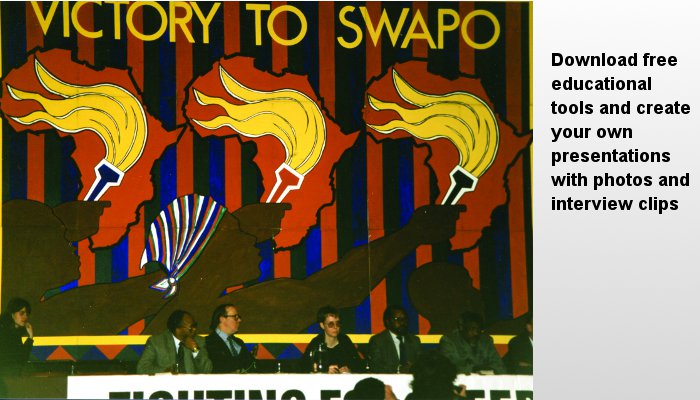
Forward to Freedom
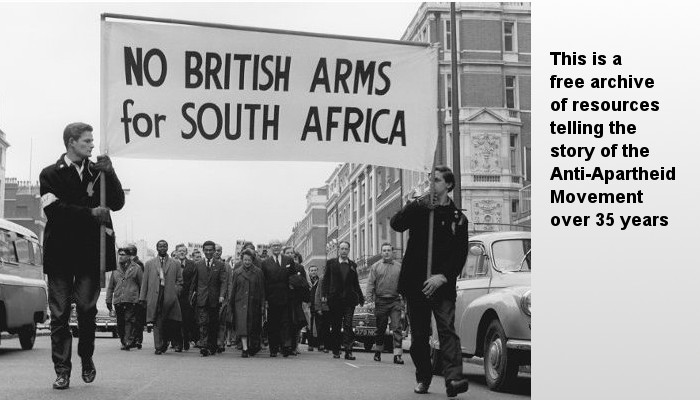
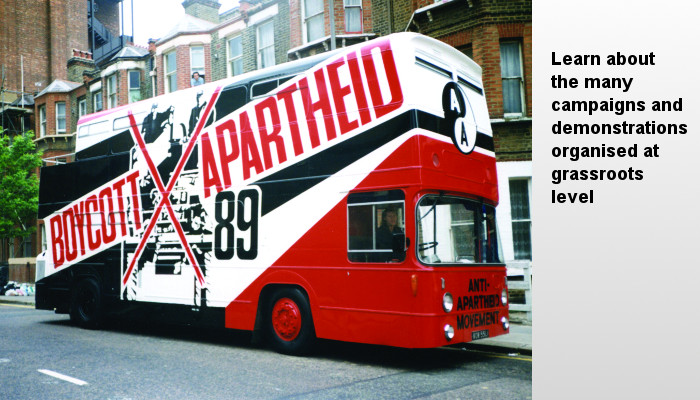
Forward to Freedom tells the story of the British Anti-Apartheid Movement and its campaigns to support the people of South Africa in their fight against apartheid. The AAM also campaigned for freedom for Namibia, Zimbabwe, Mozambique and Angola, and against South Africa’s attacks on its neighbours.
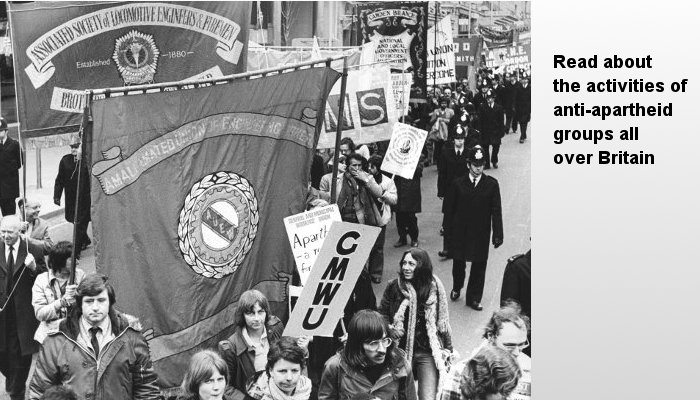
On this website you can find out how hundreds of thousands of people all over Britain took part in anti-apartheid activities. You can watch demonstrations and concerts, and hear from some of those involved. We hope you will find it interesting and look forward to hearing from you. Please send your feedback and questions to .
The website was set up by the AAM Archives Committee, which works in partnership with the Anti-Apartheid Legacy Trust to spread knowledge of the history of the anti-apartheid struggle. You can find out more about the Trust's education and community outreach programmes here. The Trust will shortly be opening the Anti-Apartheid Legacy Centre at the ANC's former London office, where many of the documents on this website will be on public display.
The AAM archive is held at the Bodleian Library, University of Oxford and is open to researchers on application for a Bodleian reader’s card. The archive of Wales AAM is at the National Library of Wales, Aberystwyth and that of the Scottish AA Committee at Glasgow Caledonian University. Records for many local AA Groups and for the London Anti-Apartheid Committee are held at local record offices – see ‘Links’.
The AAM Archives Committee also works with Action for Southern Africa (ACTSA), the successor organisation of the Anti-Apartheid Movement, in its campaigns to help establish peace and greater equality in all the countries of Southern Africa.
Latest News & Events

The Anti-Apartheid Legacy Trust's Centre of Memory and Learning is set to open in March 2027. It is based at 28 Penton Street, Islington, London, the ANC’s former London HQ. The Centre will house exhibitions, an archive and study facilities. It will also have an outreach programme and online resources. The project already has an exciting programme of events and commissions. To find out more about these click here.

A statue of Nelson Mandela was unveiled in Nelson Mandela Place, Glasgow on Friday 9th October. The statue was commissioned by the Nelson Mandela Scottish Memorial Foundation and sculpted by Royal Society of Sculptors member Alan B Herriot, following a competition and public consultation. Cast in bronze on a South African granite plinth, the statue is the first of a named black person in Scotland. Glasgow was the first city in the world to award Nelson Mandela the Freedom of the City in 1981 when he was still imprisoned on Robben Island. To watch STV coverage of the event, click here.

Don't miss 'Free Nelson Mandela', Rogan Productions three-part TV series about Mandela's life and the global campaign for his freedom, now streaming on Channel 4. The series draws on material from the AAM Archives, and features interviews with former anti-apartheid activists and footage from the AAM's 1986 Festival for Freedom on Clapham Common.
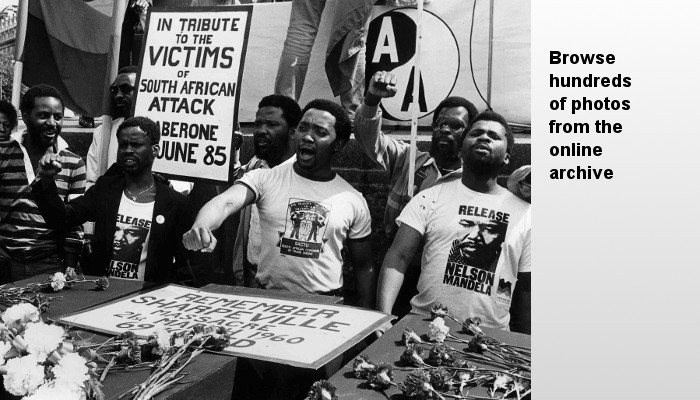
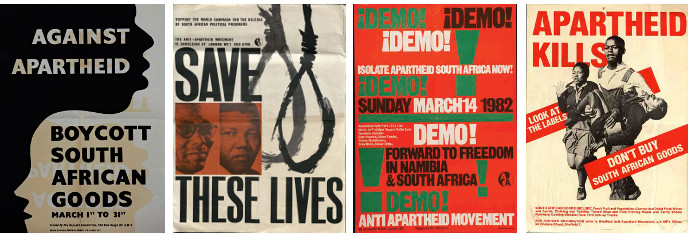
Browse an archive of photos and documents
Former activists tell their stories
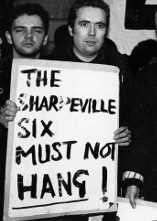
A significant part of this project was to record the experiences of former activists in Britain. Jerry Dammers formed the Specials in Coventry in 1977.
An anti-apartheid activist from his school days he helped start Artists Against Apartheid in the UK to campaign and help enforce the cultural boycott.
He wrote the song, Free Nelson Mandela, which became an international hit and helped raise awareness of the plight of Mandela and political prisoners in South Africa.
You can hear him talk about writing the song.
Learn about the history of the Anti-Apartheid Movement
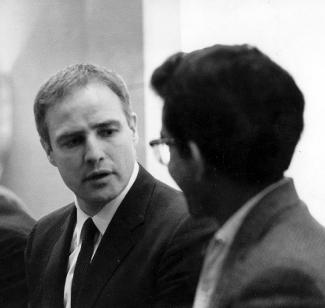 In 1964 Marlon Brando asked film directors, actors and producers to forbid the screening of their films before segregated audiences in South Africa on a visit to London.
In this photograph he is at a press conference with the Anti-Apartheid Movement’s Hon. Secretary Abdul Minty.
The Rolling Stones broke off negotiations for a South African tour and the Beatles announced they opposed apartheid.
Read more about this history starting with the Boycott Movement in 1959, through the 1960s, 1970s, 1980s and 1990s.